Execution of Elizabeth Barton
Wolf HallThe execution of Elizabeth Barton, the Maid of Kent, is the culmination of the crown’s campaign against her prophecies and their supporters. After she confesses and performs public penance, the king refuses to halt the bill of attainder: Barton is to be hanged, and her final days bring into view both the reach of royal justice and the material poverty of the woman it condemns.
From public penance to sentence
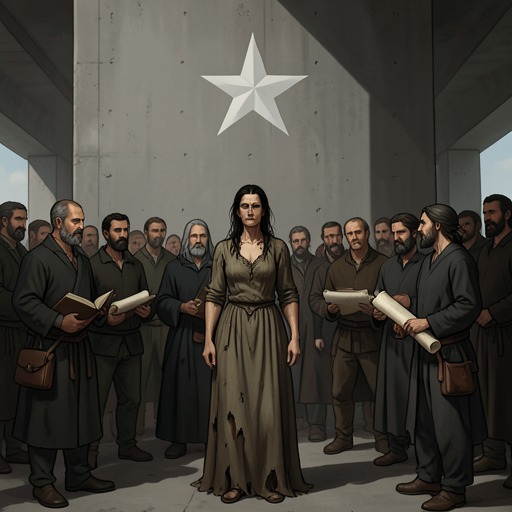
In the cold of late November, Barton and several principal supporters stand shackled and barefoot at Paul’s Cross while her confession is read to a large crowd. She asks the Londoners to pray for her and begs the king for mercy. The public display is meant to break the influence of those who speak of the end times and threaten plague and damnation. Barton is later to confess at Canterbury as well, on her home ground.
The narrative makes clear that her execution follows a managed political and legal process. Cromwell says the group spoke without duress, while also describing efforts to prevent rumours from drawing more people into the affair. One priest who had persistently lied is detained, and a court informer interprets Barton’s prophecies for him and supplies names of prominent courtiers. At Paul’s Cross, Thomas More says Barton was made use of; the exchange underscores the gap between a woman’s role in a wider network and the punishment imposed on her.
The king refuses mercy
When John Fisher asks the king to consider his illness and infirmity, Henry VIII says the bill of attainder must proceed, though he usually grants mercy to those who admit fault. Barton’s fate is settled differently: she is to be hanged. Cromwell tells the king that she has stopped prophesying and hopes she will not make him a liar at Tyburn. The execution is thus bound to the credibility of the crown’s campaign as well as to the sentence itself.
The book distinguishes this outcome from the punishment Barton’s followers receive. Henry has shown mercy to them, but is no longer inclined to do so. Barton’s execution becomes the decisive public endpoint of the case, while the king’s response to Fisher shows that a plea for leniency does not override the political decision already made.
Possessions and the cost of death
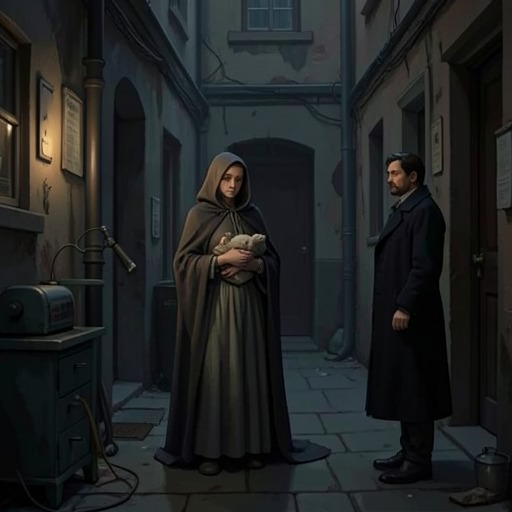
Cromwell encounters an inventory of Barton’s belongings left at her nunnery: seven sheets, two pillows and a bolster, a few dishes, and a small basin weighing twelve pounds. The basin has gone to the prioress, who paid four shillings. Her remaining goods include a plank used as a table, three pillowcases, two candlesticks, and a coat valued at five shillings. An old mantle has been given in charity to the youngest nun, and another nun has received a bed-cover. The goods are forfeited to the king as the personal property of a traitor.
Reading the inventory, Cromwell makes a note that Barton should have money to pay the hangman. She has five days to live, and the narrative emphasizes that even the practical arrangements of death carry a cost. Its attention to the fee, set beside her few possessions, makes the execution more than a state punishment: it reveals how little protection poverty affords even at the moment of death.
Significance
Barton’s hanging belongs to the book’s wider portrayal of punishment as political performance. Her confession and penance take place before a crowd; the sentence completes that public handling of her prophecies, transforming a contested religious voice into the case of a condemned traitor. The execution’s aftermath also persists in the small, countable objects of the inventory, where forfeiture and charity record what remains of her life in institutional custody.